
I’m a strong believer in the value of fresh air and not spending six months of your life avoiding the outdoors because of winter.
Sports medicine physician Peter M. Loescher, MD, Alice Peck Day Memorial HospitalWhen it’s cold and snowy, maybe the last thing you want to do is go outside.
But venturing outdoors in winter can boost your physical and mental health. Experts say cold air, natural light, and your body’s processes for keeping you warm go a long way toward helping you stay healthy this time of year.
“A cold, crisp winter day is a beautiful thing,” says sports medicine physician Peter M. Loescher, MD, of Dartmouth Health’s Alice Peck Day Memorial Hospital. “I’m a strong believer in the value of fresh air and not spending six months of your life avoiding the outdoors because of winter.”
Does your body benefit from the cold?
Your body’s natural response to the cold can help increase your metabolism and burn more calories.
"You can burn 10 to 20% more calories with cold-weather exercise,” says physical therapist Erica Robinson, DPT, of Dartmouth Health’s New London Hospital.
Research shows that exercising in the cold can turn white fat, like the kind found on your belly and thighs, into brown fat. Brown fat burns calories to make heat when you’re cold.
Scientists long believed that brown fat didn’t play much of a role in our bodies beyond puberty. But a 2009 study found that adults not only have brown fat, but that it becomes activated in colder temperatures and can absorb glucose and fats from the bloodstream.
Being active outside in winter can also strengthen your immune system and help prevent illnesses like colds and the flu. That’s because exposure to outdoor cold air has been shown to stimulate your white blood cell production.
It may even help you build endurance, too.
“Exercising outside can be a little more work, due to the increased warm-up time needed and added layers for warmth, so you are also getting those cardiovascular benefits,” Robinson says.
Can it help your mood?
Getting natural daylight, even on cloudy days, is important for your mental health. Many people feel down or experience seasonal affective disorder in winter, but regular daylight can help.
About 1 in 20 people experience seasonal depression. Research shows that regular physical activity and structured routines, especially involving morning light exposure and outdoor activity, can provide relief.
Some research shows that exercising in nature can help improve cognitive performance.
“If you get outside and spend time in natural sunlight, there’s just no substitute. There’s nothing better than that,” Loescher says.
Do you need to warm up first?
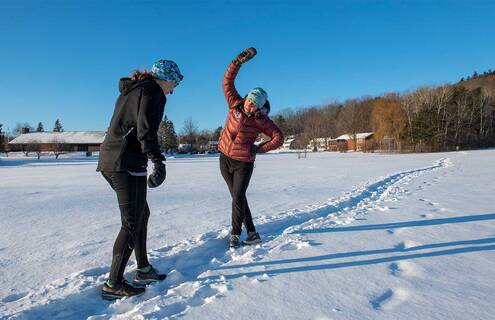
Before going outside, warm up for five or ten minutes. Try swinging your arms, doing jumping jacks, squats, lunges, or marching in place.
“Muscles are tighter in the cold, so you really want to do a good dynamic warm-up before you start exercising vigorously,” Loescher says. “Because you can pull a muscle or tear a tendon much more easily when it's cold out.”
After you’ve warmed up inside, begin your exercise as soon as you step outside. This helps you avoid that sudden drop in temperature that can slow blood flow to your hands and feet.
Subscribe to the Living Better newsletter
Your trusted resource for reliable and up-to-date health and wellness information in the Northeast. Get it delivered to your inbox every other week.
What should you wear?
For walking, snowshoeing, or cross-country skiing, start with a moisture-wicking layer next to your skin, add an insulating layer, and finish with a windproof outer layer. Remember to wear a warm hat, insulated gloves, and moisture-wicking socks.
“You really have to think about your extremities like your toes, fingers, and ears because those are the places that are going to get frostbite first,” Loescher explains.
If you’re hiking trails in winter or climbing hills on snowshoes or skis where there might be changing weather conditions, opt for a mid-layer under the insulating layer.
Fleece and heavy wool sweaters are good mid-layer options. Bring an extra one in case you need to change because of sweat or you’re feeling chilled. Wearing waterproof boots is also key.
Outdoor gear can make a difference, whether you’re out for a walk around your neighborhood or in the woods for a backcountry hike. Wear microspikes for traction or snowshoes for deep snow. Use hiking poles for stability and bring a headlamp if you’re out late in the day or in the woods.
And as soon as you return home from any winter outdoor activity, change out of any wet clothes right away.
“You want to get out of those wet clothes because that wet layer can freeze against your skin, and that will drop your core body temperature very quickly,” he says.
Staying safe and comfortable
Exercising outdoors in winter has some risks, such as falling or being exposed to extreme cold.
Experts recommend the following tips:
- Using hiking poles, microspikes, or snowshoes for stability, traction, or deep snow.
- Wearing reflective gear and being mindful of reduced visibility, especially when you are outdoors after dark.
- Dressing in layers and wearing sweat-wicking materials.
- Avoiding wearing cotton as it absorbs moisture and stays wet.
- Removing layers as soon as you start sweating. It's easier to add layers back than to dry clothes covered in sweat.
- Covering your mouth with a scarf or face covering. This helps add moisture to the air you breathe, which is especially helpful if you have asthma or other health conditions.
- Staying indoors on days with extremely cold temperatures or windy conditions.
Start small
Motivation can be tough when it’s cold.
“Put exercise on your schedule like it’s homework or an appointment,” Robinson says. “Sometimes scheduling it means you’re already mentally blocking out the time for it.”
Begin with short outings, like five or 10 minutes, when you’re just getting started.
“The hardest mile is the one from the couch to the front door,” Loescher says. “Once you get out there and start moving, it won’t be so bad. You’ll notice that it probably feels pretty good.”
Resources + Related Stories
Green Mountain Club Winter Hiking Tips