

This work is about more than identifying problems—it’s about co-creating solutions with the people most affected
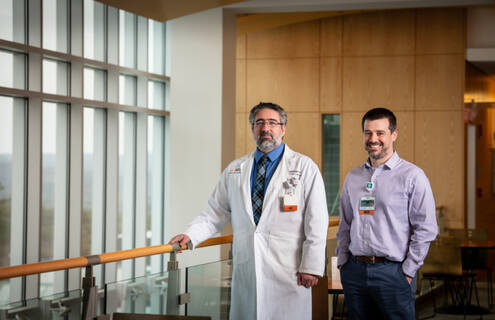
Garrett T. Wasp, MD, MPH, a medical oncologist at Dartmouth Cancer CenterA new study from Dartmouth Cancer Center researchers shed light on the reasons many patients in rural communities face delays in receiving critical follow-up treatment after head and neck cancer surgery, and what can be done to address those gaps.
Published recently in JAMA Otolaryngology – Head & Neck Surgery, the study focuses on whether patients begin radiation therapy within the recommended six-week window after surgery, a timeline known to improve survival for people with head and neck squamous cell carcinoma.
“Despite clear guidelines, many patients across the U.S., especially those in rural areas, are not starting radiation therapy on time,” said lead author Garrett T. Wasp, MD, MPH, a medical oncologist at Dartmouth Cancer Center. “Our goal was to better understand why, by listening directly to patients, caregivers, and care teams.”
The study included interviews and structured discussions with patients, caregivers, and clinical staff at two rural-serving cancer clinics within Dartmouth Health. From those conversations, researchers identified five key challenges that often delay care:
• Communication gaps between patients and care teams
• Complex care coordination across multiple providers
• Limited access to dental care required before radiation
• Transportation barriers, especially in rural areas
• The physical and emotional toll of recovering from cancer surgery
“These are not isolated issues—they intersect and compound one another,” said co-senior author Philip E. Schaner, MD, PhD, a radiation oncologist at Dartmouth Cancer Center. “For example, transportation barriers can delay dental clearance, which then delays radiation therapy.”
The study also highlighted strengths within rural communities that can help patients stay on track. Participants pointed to the value of dedicated care coordinators, strong community connections, and local resources that support patients throughout treatment.
Caregivers, in particular, were identified as essential to navigating the complexities of cancer care – often managing logistics, coordinating appointments, and advocating for patients.
“Caregivers are essential partners in care, but they also carry a great deal of responsibility,” Wasp said. “Supporting them more effectively is an important opportunity for improving outcomes.”
Building on these findings, the research team is now developing targeted, community-informed strategies to reduce treatment delays and improve access to care in rural areas.
“This work is about more than identifying problems—it’s about co-creating solutions with the people most affected,” Wasp said. “That’s how we move toward more equitable, patient-centered cancer care.”
Dartmouth Health, the nation’s most rural academic health system is committed to setting the standard in rural health care so that all people living in rural areas can live their healthiest lives. Among other key initiatives, Dartmouth Health founded the Center for Advancing Rural Health Equity in 2022.
“We’re especially grateful to the Agency of Healthcare Research and Quality (AHRQ) and the Patient-Centered Outcomes Research Institute (PCORI), whose funding through Dartmouth’s Learning Health System E-STaR Center made this initial work possible,” acknowledged Wasp.
About Dartmouth Cancer Center
Since 1972, Dartmouth Cancer Center (DCC) has combined groundbreaking and advanced cancer research at Dartmouth and the Geisel School of Medicine with award-winning, personalized, compassionate, patient-centered cancer care and clinical trials. At its flagship location at Dartmouth Health’s Dartmouth Hitchcock Medical Center, with 14 locations across New Hampshire and Vermont, DCC is one of fewer than 60 National Cancer Institute-designated Comprehensive Cancer Centers nationally. Each year, DCC manages 74,000 appointments, treats more than 4,500 newly diagnosed patients, and currently offers more than 240 active clinical trials. DCC remains committed to excellence, outreach and education. DCC strives to create new knowledge and impact, accelerate integrated and collaborative research to prevent and cure cancer, enhance survivorship and promote cancer-related health equity. Learn more at cancer.dartmouth.edu.
About Dartmouth Health
Dartmouth Health, New Hampshire’s only academic health system and largest private employer, serves patients across New England. Dartmouth Health provides access to more than 2,300 providers in nearly every area of medicine, delivering care at its flagship hospital, Dartmouth Hitchcock Medical Center (DHMC) in Lebanon, NH. Its network of hospitals, outpatient centers, clinics and home care facilities, spans a broad geographical area. Year after year, DHMC is named the #1 hospital in New Hampshire by U.S. News & World Report, and is consistently recognized for high performance in numerous clinical specialties and procedures. Dartmouth Health includes Dartmouth Cancer Center, northern New England’s only National Cancer Institute-designated Comprehensive Cancer Centers and one of less than than 60 total nationally; Dartmouth Health Children’s, which includes the state’s only children’s hospital, the Golisano Children's Hospital at Dartmouth Health, and more than 20 locations around the region; eight member hospitals in Lebanon, Keene, Claremont, Hampstead, and New London, NH, and Windsor and Bennington, VT; Dartmouth Health Home Care; Dartmouth Health Connected Care Center for Telehealth, serving patients as far away as Texas; and more than 30 primary and multi-specialty clinics across New Hampshire and Vermont. Through its partnership with Dartmouth College, Dartmouth’s Geisel School of Medicine and the White River Junction VA Medical Center, Dartmouth Health trains nearly 400 medical residents and fellows annually and performs cutting-edge research and clinical trials with international impact. Dartmouth Health and its more than 16,000 employees are committed to serving the healthcare needs of everyone in the communities it serves and to providing every patient with exceptional, state-of-the-art, personalized care. Learn more at dartmouth-health.org.