

Critical lung development occurs in childhood and early adolescence, making children’s lungs particularly susceptible to damage caused by cigarette smoking.
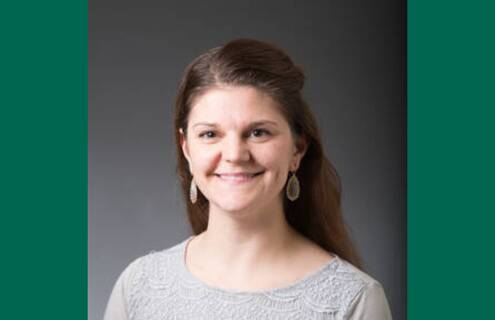
Laura M. Paulin, MD, MHSA new study senior authored by a Dartmouth Health pulmonologist shows that childhood smoking before age 15 increases a person’s risk of developing chronic obstructive pulmonary disease (COPD). The study is published in the November 2024 issue of Chronic Obstructive Pulmonary Diseases: Journal of the COPD Foundation.
The study, led by Laura M. Paulin, MD, MHS, expanded on previous research and examined whether childhood smoking before age 15 increased the likelihood of a person developing COPD later in life, even after accounting for possible secondhand smoke exposure. The new research examined a nationally representative sample of adults 40 years of age and older from the Population Assessment of Tobacco and Health Study.
“Our study suggests that a person with a childhood smoking history has an increased risk of developing COPD, regardless of current smoking status, smoking duration, cigarette pack years and exposure to secondhand smoke,” Paulin said. “Critical lung development occurs in childhood and early adolescence, making children’s lungs particularly susceptible to damage caused by cigarette smoking. These findings highlight the need for additional public health efforts to reduce, and ultimately prevent, childhood smoking.”
COPD is an inflammatory lung disease, comprising several conditions, including chronic bronchitis and emphysema, and can be caused by genetics and irritants like smoke or pollution. The disease affects more than 30 million Americans and is the fourth leading cause of death worldwide.
A previous study using data from the 2020 National Health Interview Survey showed that COPD was more prevalent in adults who began smoking prior to 15 years of age (childhood smoking) compared to those who began after 15 years of age, regardless of their current smoking status and lifetime cigarette use.
To view the full study, visit bit.ly/4h8334h.
About Dartmouth Health
Dartmouth Health, New Hampshire’s only academic health system and largest private employer, serves patients across New England. Dartmouth Health provides access to more than 2,300 providers in nearly every area of medicine, delivering care at its flagship hospital, Dartmouth Hitchcock Medical Center (DHMC) in Lebanon, NH. Its network of hospitals, outpatient centers, clinics and home care facilities, spans a broad geographical area. Year after year, DHMC is named the #1 hospital in New Hampshire by U.S. News & World Report, and is consistently recognized for high performance in numerous clinical specialties and procedures. Dartmouth Health includes Dartmouth Cancer Center, northern New England’s only National Cancer Institute-designated Comprehensive Cancer Centers and one of less than than 60 total nationally; Dartmouth Health Children’s, which includes the state’s only children’s hospital, the Golisano Children's Hospital at Dartmouth Health, and more than 20 locations around the region; eight member hospitals in Lebanon, Keene, Claremont, Hampstead, and New London, NH, and Windsor and Bennington, VT; Dartmouth Health Home Care; Dartmouth Health Connected Care Center for Telehealth, serving patients as far away as Texas; and more than 30 primary and multi-specialty clinics across New Hampshire and Vermont. Through its partnership with Dartmouth College, Dartmouth’s Geisel School of Medicine and the White River Junction VA Medical Center, Dartmouth Health trains nearly 400 medical residents and fellows annually and performs cutting-edge research and clinical trials with international impact. Dartmouth Health and its more than 16,000 employees are committed to serving the healthcare needs of everyone in the communities it serves and to providing every patient with exceptional, state-of-the-art, personalized care. Learn more at dartmouth-health.org.