

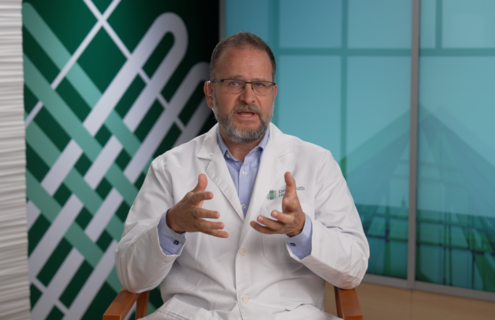
"How do we think about a person and their risk of suicide?” asks Matthew S. Duncan, MD, a psychiatrist at Dartmouth Hitchcock Medical Center.
Duncan, who has been impacted by suicide both professionally and personally, primarily treats adults, mostly in the outpatient setting. He also sees patients in the emergency department and inpatient units, and he’s spent a lot of time thinking about how to lower suicide risk
“It’s often very difficult to predict who is at risk and when. Suicide risk is very complicated and can be hidden even to those closest to the person,” he says.
Once more, over the past few decades, there's been a concerning trend of increased rates of suicide deaths across the country.
However, Duncan does see one positive: an expanding conversation no longer focused on individual mental health, but now including broader discussions around prevention, education, and mental health.
“Entire communities, schools, the healthcare system, and families are all engaging in how to recognize and respond, as quickly and appropriately as we can,” he says.
Here’s what he has observed when it comes to lowering suicide risk.
What the data says
Over a twenty-year period, the data has not been encouraging.
The U.S. Centers for Disease Control and Prevention (CDC) recently reported that the national suicide rate was 13.7% in 2024, only a slight drop from a two-decade-long increase that peaked at 14.2% a few years ago.
More locally, over the twenty years leading into 2024, New Hampshire’s rate of suicide increased by 65.7% to 16.4 per 100,000.
Vermont’s rate increased by only 1.4% to 14.7 per 100,000, though youth in both states suffered. Over that period, both states showed precipitous increases in the suicide rates for youth aged 10 to 25 years old.
And yet, despite those numbers, there is a glimmer of hope, suggests Duncan. Last year, youth's mental health in New Hampshire and Vermont modestly improved.
According to the New Hampshire Department of Health & Human Services, the percentage of students reporting that they seriously considered, planned, or attempted suicide decreased in 2025, compared to 2023 and 2021, suggesting progress is being made.
“There was a slight decline. And even though these rates are high, seeing this trend is important,” says Duncan.
Compared to 2015 and between 2023 and 2025, the percentage of students who made a suicide plan also statistically decreased in Vermont.
Determining an individual’s risk
Part of the reason for the drop may be growing understanding of suicide risk.
Suicide risk has long been tied to mental health, but everyone has a complex combination of biological vulnerabilities, psychological factors, and social risks, Duncan points out.
“People at risk of suicide don't necessarily always have a mental health condition. Social factors such as feeling isolated, difficult relationships, struggles with housing, employment and finances all compound these risks,” he says, adding that there’s also more recognition of the influence of social media, particularly on youth.
The impact of firearms
When you put the combination of risk into an acute stress situation and combine it with having access to lethal means–specifically firearms or dangerous medications–things can escalate really quickly and become a crisis, says Duncan.
One important form of prevention is therefore to restrict access to firearms when someone is in a state of crisis.
“There are a range of methods involved in suicide, but when a person uses a firearm, the rate of fatality is around 90%,” he points out. “Other common methods can be as low as 2% to 3%.”
Duncan continues, “I think one of the most important things we can do, if there's a firearm in your home, is to lock that firearm up safely. And we've seen that in studies, particularly with youth, the risk of unintentional injury or suicide can be reduced by as much as 73%. Anything we can do that spreads out time or puts a space between a person in crisis and that access to lethal means can be the big difference,” he says.
How healthcare can help lower risk
Another method for mitigating suicide risk is universal screening.
“You've probably noticed if you've gone to your primary care doctor or presented to the emergency room, everyone is asked about feelings of hopelessness or thoughts of suicide. That's a big change. That didn't happen a decade ago,” Duncan says.
Also more common are structured assessments. “These allow us to stratify risk and have more targeted approaches to helping keep people safe,” he explains. “Mental health resources are getting spread out into the system in primary care and specialty care. And we even have proactive consultation resources, meaning someone admitted to our medical or surgical floors can have mental health contact before there's really a concern.”
Something else having an effect is firearm education, which includes providing free locks that people can use at home. It also means developing productive partnerships with state, federal officials, gun owners, local gun sellers and dealers to promote gun safety and awareness, says Duncan.
In terms of mental health education, there are also programs like Mental Health First.
“This program teaches you how to recognize signs of someone undergoing a mental health crisis, active substance use, which is a high risk factor for suicide, and give people a chance to practice how they would approach someone in a nonjudgmental way, to listen openly, to not be afraid to ask, and to help get them the help they need,” he says.
What you can do if you suspect someone is thinking about suicide
“A concern I still hear after all these years is that there's some hesitation about asking people if they're experiencing suicidal ideation. We know very well that asking never increases risk. It only helps connect people to resources,” he says.“You can really make a big difference."
Duncan also stresses that if you or someone you know is struggling, they or you can dial the 9-8-8 Crisis and Suicide Lifeline, which is available 24/7. “You can call, you can text, you can chat. It's a wonderful resource,” he says.
What you can do as a parent when it comes to social media
“Not all social media is shown to be negative or bad,” Duncan says. “There can be positive aspects of connecting to others and seeking help and learning that can be a part of social media use. Total time on social media is also not connected to things like hopelessness, depression, or suicidal ideation. It's more about the quality of that time, what people are accessing, and the nature of those interactions,” he says.
To get answers about how their children are using social media, parents need to communicate with them, he says.
“The biggest risk when it comes to suicide is cyberbullying. Where bullying has always happened, it's oftentimes been something that happens at a certain time and a place, but with these platforms, it can be anywhere and at any time of day. And so I think the primary thing as a parent is to keep an open dialogue,” he says.
Duncan is also supportive of nationwide efforts to restrict phone usage.
As an analogy, he points to efforts to make car travel safer. “In 100 years, we reduced the risk of getting into a fatal accident by 94%. And I think when it comes to social media and these platforms, it needs to be the same kind of engineering for safety, policies, enforcement, and monitoring. I think we need to have the same level of a multisystemic approach to digital and social media. There’s a lot of headwinds against it, but it really requires everybody,” he says.