

These recommendations...emphasize that people with drug-resistant epilepsy should have timely access to specialized epilepsy care including surgical procedures.
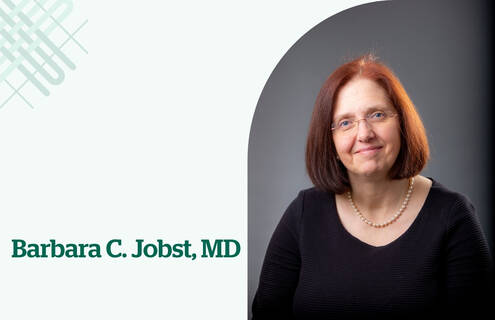
Barbara C. Jobst, MDA Dartmouth Health neurologist co-led the creation of a new clinical practice guideline providing updated, evidence-based recommendations for the surgical treatment of drug-resistant epilepsy in adults and children. The guideline from the American Epilepsy Society (AES) and Congress of Neurological Surgeons (CNS) is the first comprehensive update to epilepsy surgery recommendations in more than two decades, incorporating advances in surgical treatment since previous practice parameters were published in 2003.
“People with drug-resistant epilepsy are often waiting far too long to be evaluated for treatments that could significantly improve seizure control and quality of life,” said Barbara C. Jobst, MD, Dartmouth Health’s chair of neurology and neurocritical care, who co-led the guideline creation with colleagues Jorge Gonzalez-Martinez, MD, PhD, MCHM, of the University of Pittsburgh, and Gregory Bergey, MD, of Johns Hopkins University School of Medicine. “These recommendations give clinicians an updated framework for considering the full range of surgical options and, importantly, emphasize that people with drug-resistant epilepsy should have timely access to specialized epilepsy care including surgical procedures.”
The guideline comes at a time when epilepsy surgery remains substantially underused. In the United States, people wait an average of 10.1 years for a diagnosis of drug-resistant epilepsy and 16.7 years for referral for epilepsy surgery. An estimated 476,000 to 1.2 million of the 3.4 million people living with active epilepsy in the United States have drug-resistant epilepsy, yet only 1,508 temporal lobectomies and 877 extratemporal resections were performed across 256 U.S. epilepsy centers in 2019.
The guideline goes beyond seizure outcomes to consider quality of life, mortality, cognitive and neuropsychological outcomes, mental health, social functioning and adverse events. Many recommendations are conditional due to available evidence being limited, underscoring the importance of shared decision-making that reflects each patient’s individual circumstances, values, and preferences. It also includes a good practice statement emphasizing that every person with drug-resistant epilepsy should have access to a tertiary epilepsy center for evaluation for epilepsy surgery.
Developed through a collaboration between AES and CNS, the multidisciplinary guideline panel included adult and pediatric epileptologists and neurologists, adult and pediatric neurosurgeons, a neuropsychologist, a neuroethicist, and a patient representative.
To read the full guideline, visit go.d-h.org/8epdyc.
About Dartmouth Health
Dartmouth Health, New Hampshire’s only academic health system and largest private employer, serves patients across New England. Dartmouth Health provides access to more than 2,300 providers in nearly every area of medicine, delivering care at its flagship hospital, Dartmouth Hitchcock Medical Center (DHMC) in Lebanon, NH. Its network of hospitals, outpatient centers, clinics and home care facilities, spans a broad geographical area. Year after year, DHMC is named the #1 hospital in New Hampshire by U.S. News & World Report, and is consistently recognized for high performance in numerous clinical specialties and procedures. Dartmouth Health includes Dartmouth Cancer Center, northern New England’s only National Cancer Institute-designated Comprehensive Cancer Centers and one of less than than 60 total nationally; Dartmouth Health Children’s, which includes the state’s only children’s hospital, the Golisano Children's Hospital at Dartmouth Health, and more than 20 locations around the region; eight member hospitals in Lebanon, Keene, Claremont, Hampstead, and New London, NH, and Windsor and Bennington, VT; Dartmouth Health Home Care; Dartmouth Health Connected Care Center for Telehealth, serving patients as far away as Texas; and more than 30 primary and multi-specialty clinics across New Hampshire and Vermont. Through its partnership with Dartmouth College, Dartmouth’s Geisel School of Medicine and the White River Junction VA Medical Center, Dartmouth Health trains nearly 400 medical residents and fellows annually and performs cutting-edge research and clinical trials with international impact. Dartmouth Health and its more than 16,000 employees are committed to serving the healthcare needs of everyone in the communities it serves and to providing every patient with exceptional, state-of-the-art, personalized care. Learn more at dartmouth-health.org.