

Editor’s note: Broadcast-quality video and audio can be found here. This video content is cleared for use by media outlets on all digital and broadcast platforms, with credit to Dartmouth Health.
September is National Suicide Prevention Month, and Dartmouth Health experts say that suicide prevention requires more than just identifying and treating mental health conditions.
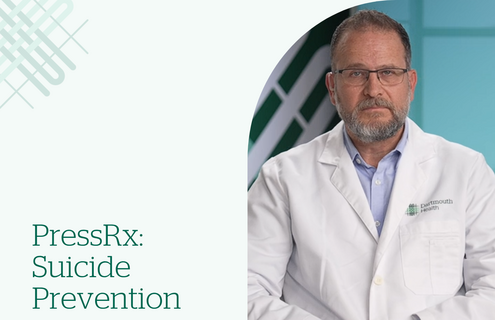
Matthew S. Duncan, MD, a psychiatrist at Dartmouth Health’s Dartmouth Hitchcock Medical Center, said communities, families, schools, and healthcare organizations all have a role to play in recognizing warning signs, reducing risk, and connecting people to help.
“Suicide risk is very complicated and can be hidden, even to those closest to the person,” said Duncan. “Oftentimes, it’s very impulsive.”
According to the Centers for Disease Control and Prevention’s most recent national Youth Risk Behavior Survey, using data from 2023, 40% of high school students reported experiencing persistent feelings of sadness or hopelessness, 20% seriously considered suicide, and 9% reported a suicide attempt.
Duncan said New Hampshire’s most recent data, from 2021 to 2023, showed a slight decline in youth suicide-related measures for the first time in many years, although rates remain high.
While suicide risk is often associated with mental health conditions, Duncan said social factors can also play an important role, especially for those living in rural areas. Isolation, difficult relationships, housing and employment struggles, financial stress, and other challenges can increase risk. For young people, the quality of their interactions on social media—and particularly experiences such as cyberbullying—can also contribute.
Creating time and distance from lethal means
One evidence-based suicide prevention strategy is reducing access to lethal means during periods of crisis. Duncan said this is particularly important because suicidal crises can develop quickly and impulsively.
Firearms are the most concerning lethal means because of their high fatality rate. Duncan emphasized the importance of securely storing firearms in the home, and noted that studies involving youth have shown that safe firearm storage can substantially reduce risk of suicide and unintentional injury.
Dartmouth Health actively works to expand firearm safety education, provides free firearm locks, and builds partnerships with state and federal officials, gun owners, and local firearm dealers.
Recognizing the risk and starting the conversation
Healthcare systems also have an increasingly important role in suicide prevention. At Dartmouth Health, patients are routinely asked about hopelessness and suicidal thoughts when visiting primary care and emergency departments. Structured assessments can help clinicians better understand risk and determine appropriate interventions.
Mental health resources are increasingly integrated into primary and specialty care, while proactive consultation can connect hospitalized patients with mental health professionals before a crisis develops.
Beyond healthcare settings, Duncan encouraged people to learn how to recognize when someone may be struggling and how to respond. Training programs such as Mental Health First Aid can help people practice listening without judgement, asking about suicide and connecting someone with appropriate support.
Duncan emphasized that asking someone whether they’re having thoughts of suicide does not increase their risk. Instead, asking can open the door to a conversation where you can connect a person to resources.
For parents of teenagers, Duncan recommends maintaining an open dialogue about social media and understanding what young people are experiencing online. Cyberbullying, unlike traditional bullying, can follow young people anywhere and anytime.
“Each person developing a sense of comfort and some skills to recognize and respond and know how to connect someone to help can really make a big difference,” Duncan said.
If you or someone you know is struggling, the 988 Suicide & Crisis Lifeline is available 24 hours a day, seven days a week by calling or texting 988.
Duncan recently spoke about suicide prevention during Dartmouth Health’s monthly Zoom media availability, PressRx. Our next PressRx will center around health information literacy, and is scheduled for Monday, October 26 at 10 a.m. To RSVP, please contact elissa.j.borden@hitchcock.org.
About Dartmouth Health
Dartmouth Health, New Hampshire’s only academic health system and largest private employer, serves patients across New England. Dartmouth Health provides access to more than 2,300 providers in nearly every area of medicine, delivering care at its flagship hospital, Dartmouth Hitchcock Medical Center (DHMC) in Lebanon, NH. Its network of hospitals, outpatient centers, clinics and home care facilities, spans a broad geographical area. Year after year, DHMC is named the #1 hospital in New Hampshire by U.S. News & World Report, and is consistently recognized for high performance in numerous clinical specialties and procedures. Dartmouth Health includes Dartmouth Cancer Center, northern New England’s only National Cancer Institute-designated Comprehensive Cancer Centers and one of less than than 60 total nationally; Dartmouth Health Children’s, which includes the state’s only children’s hospital, the Golisano Children's Hospital at Dartmouth Health, and more than 20 locations around the region; eight member hospitals in Lebanon, Keene, Claremont, Hampstead, and New London, NH, and Windsor and Bennington, VT; Dartmouth Health Home Care; Dartmouth Health Connected Care Center for Telehealth, serving patients as far away as Texas; and more than 30 primary and multi-specialty clinics across New Hampshire and Vermont. Through its partnership with Dartmouth College, Dartmouth’s Geisel School of Medicine and the White River Junction VA Medical Center, Dartmouth Health trains nearly 400 medical residents and fellows annually and performs cutting-edge research and clinical trials with international impact. Dartmouth Health and its more than 16,000 employees are committed to serving the healthcare needs of everyone in the communities it serves and to providing every patient with exceptional, state-of-the-art, personalized care. Learn more at dartmouth-health.org.