

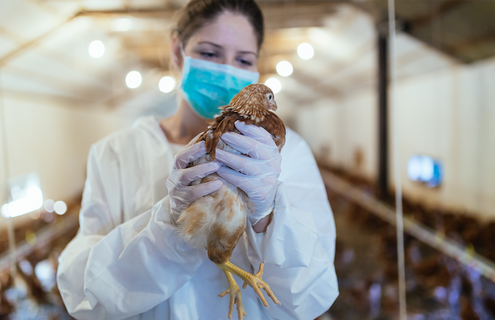
As this virus can spread between poultry or from a bird to a human, it’s important to exercise caution, especially in states like New Hampshire where many households have backyard chickens.
Michael S. Calderwood, MD, MPHH5N1 avian influenza, better known as bird flu, has been detected in animals in all 50 states. Risk for spread to humans is low, with a small number of cases in people nationwide. There are no confirmed human cases in New Hampshire at this time.
“Bird flu currently poses a low risk for humans, with 69 human cases reported in the United States as of February 19, 2025, no known person-to-person transmission, and one death. In humans, H5N1 avian influenza usually presents as a mild respiratory illness or conjunctivitis (better known as pinkeye),” said Michael S. Calderwood, MD, MPH, chief quality officer at Dartmouth Health’s Dartmouth Hitchcock Medical Center. “We haven’t yet had any human cases reported in New England, but this virus has been identified in wild birds and backyard chickens. As this virus can spread between poultry or from a bird to a human, it’s important to exercise caution, especially in states like New Hampshire where many households have backyard chickens.”
Dartmouth Health recommends the following to help reduce the risk of acquiring and spreading bird flu:
- If you keep chickens or other fowl at your home or farm, avoid contact with sick or dead birds. The same advice goes for birds in the wild.
- If you must have contact with dead animals, wear personal protective equipment, including disposable gloves, safety goggles, an N95 respirator mask, coveralls, and rubber boots.
- If you keep livestock, prevent wild birds from interacting with your animals by covering/enclosing outdoor feeding areas, promptly cleaning up feed spills, and avoiding bodies of water where migratory birds congregate (even large puddles). Clean your hands, clothes and shoes before and after handling poultry, and limit who outside your household touches/interacts with your animals.
- Do not touch surfaces or materials contaminated with bodily fluids/excretions from any animals, wild or domestic, that are confirmed or suspected to have bird flu.
- Do not touch or consume raw dairy products from cows or goats that are or may have been exposed to bird flu.
- If you are confirmed to or may have been exposed to bird flu, stay home as much as you are able, and wear a properly fitted mask in public spaces.
For the latest updates on bird flu in the U.S. and how to protect yourself and your animals, visit cdc.gov/bird-flu.
About Dartmouth Health
Dartmouth Health, New Hampshire’s only academic health system and largest private employer, serves patients across New England. Dartmouth Health provides access to more than 2,300 providers in nearly every area of medicine, delivering care at its flagship hospital, Dartmouth Hitchcock Medical Center (DHMC) in Lebanon, NH. Its network of hospitals, outpatient centers, clinics and home care facilities, spans a broad geographical area. Year after year, DHMC is named the #1 hospital in New Hampshire by U.S. News & World Report, and is consistently recognized for high performance in numerous clinical specialties and procedures. Dartmouth Health includes Dartmouth Cancer Center, northern New England’s only National Cancer Institute-designated Comprehensive Cancer Centers and one of less than than 60 total nationally; Dartmouth Health Children’s, which includes the state’s only children’s hospital, the Golisano Children's Hospital at Dartmouth Health, and more than 20 locations around the region; eight member hospitals in Lebanon, Keene, Claremont, Hampstead, and New London, NH, and Windsor and Bennington, VT; Dartmouth Health Home Care; Dartmouth Health Connected Care Center for Telehealth, serving patients as far away as Texas; and more than 30 primary and multi-specialty clinics across New Hampshire and Vermont. Through its partnership with Dartmouth College, Dartmouth’s Geisel School of Medicine and the White River Junction VA Medical Center, Dartmouth Health trains nearly 400 medical residents and fellows annually and performs cutting-edge research and clinical trials with international impact. Dartmouth Health and its more than 16,000 employees are committed to serving the healthcare needs of everyone in the communities it serves and to providing every patient with exceptional, state-of-the-art, personalized care. Learn more at dartmouth-health.org.